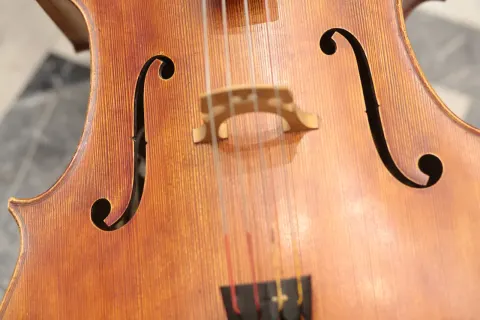
Eight cellos breathe.
What happens when eight cellists with different biographies play the same note – and why that is more than volume.
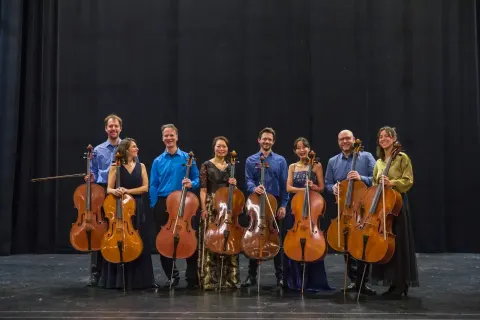
Eight cellos are not volume. They are a space.
The same note, eight times
When eight cellists play the same note, it is never the same eight times. Every bow has a different length, every arm a different weight, every person a different idea of when a note begins.
At first this is not a problem but the raw material. Sound emerges from this difference – if you hear it before you smooth it out.
What Carlos Nozzi passed on
Carlos Nozzi, former principal cellist of the Buenos Aires Philharmonic, shaped 8Celli’s early years. His arrangements are not mere transcriptions. They use the fact that eight cellos can be both an orchestra and a chamber group.
In his arrangements there are passages that sound like a full string orchestra and brief moments where only two voices remain. The ear leaps between closeness and expanse – and that is precisely the appeal.
Breathing together
The most important work in an ensemble is not the interplay of fingers, but breathing together. A note does not begin when the bow touches the string. It begins an idea earlier.
That is why we rehearse slowly, often without a beat, and listen to the end of a note rather than its beginning. Where does the note fade? Who carries it on? Who may let it go?
Repertoire as a journey
The programme travels from Latin America to Europe. This is not geographical completeness but a movement of sound: from rhythm to cantilena, from dance to form. Villa-Lobos stands not as an exotic curiosity but as a composer who never accepted the border between art music and popular language.
What remains
At the end of a concert, it is rarely the most difficult passage that stays in the memory. It is the moment when eight bows come to rest at once – and the room continues to sound for a moment longer than the ensemble.